23 October 2026 · 5 min read
Bosnia Rally 2027 in Kupres: How a Riding Day Works
From check-in on 12 June to checkout on 19 June: what a week at Bosnia Marathon 2027 looks like, and how a single riding day actually works.
Read moreRiding skills
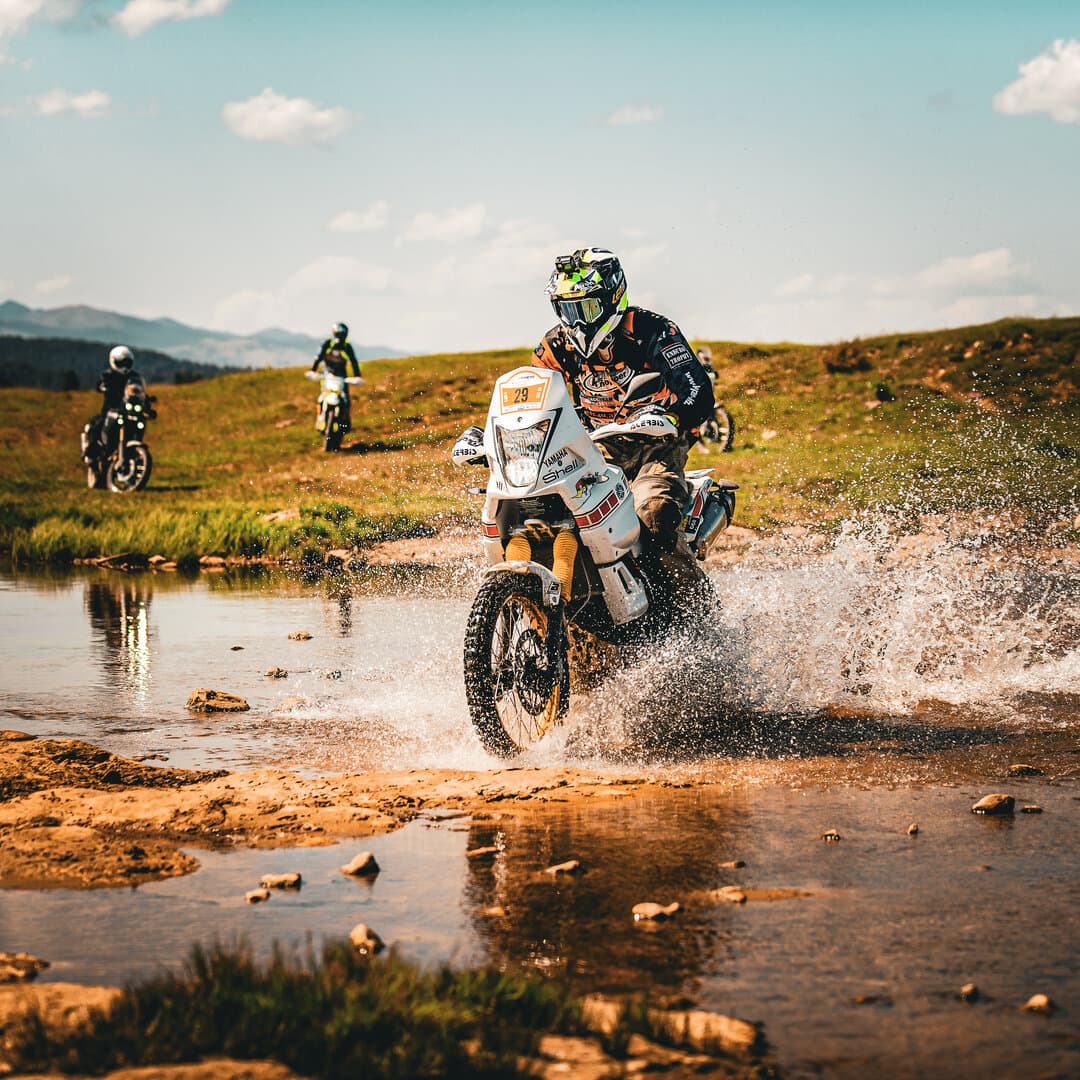
Riding off-road in a group is twice the fun – and needs more discipline than riding on the road. Dust kills visibility, braking distances on gravel are longer, and if someone goes down, somebody needs to notice. A few clear agreements keep everyone relaxed and safe.
This guide covers spacing, pace, overtaking, stops and water crossings, the hand signals that work, and what to do if you lose the group. Finally, it explains how riding is organised on the Bosnia Marathon.
On dry gravel every bike drags a dust cloud behind it. Follow too closely and you see potholes, rocks and bends too late. Leave far more space than you would on tarmac – enough to be clear of the dust. In a crosswind, riding slightly offset can help; on narrow tracks the line is set for you.
A big gap has a second benefit: if the rider ahead brakes suddenly, falls or stalls on a climb, you have room to react. In the forest or after rain there is less dust, but braking distances on slippery ground are longer, so keep the gap large.
The most common mistake in groups is riding faster than you can to avoid being left behind. On unfamiliar terrain that is how crashes happen. Ride at your own pace – the group adapts to the slowest rider, not the other way round. If you are new to gravel, read our guide to a Bosnia enduro trip for beginners.
Only overtake once the rider ahead has seen you and moved over – never on bends, crests or narrow sections with loose rock. Never stop just after a bend or crest; stop where following riders can see you early. Park at the edge so others can pass safely, but stay on the track rather than in the undergrowth.
Which signals you use matters less than everyone knowing the same ones. Agree them before you set off, for example:
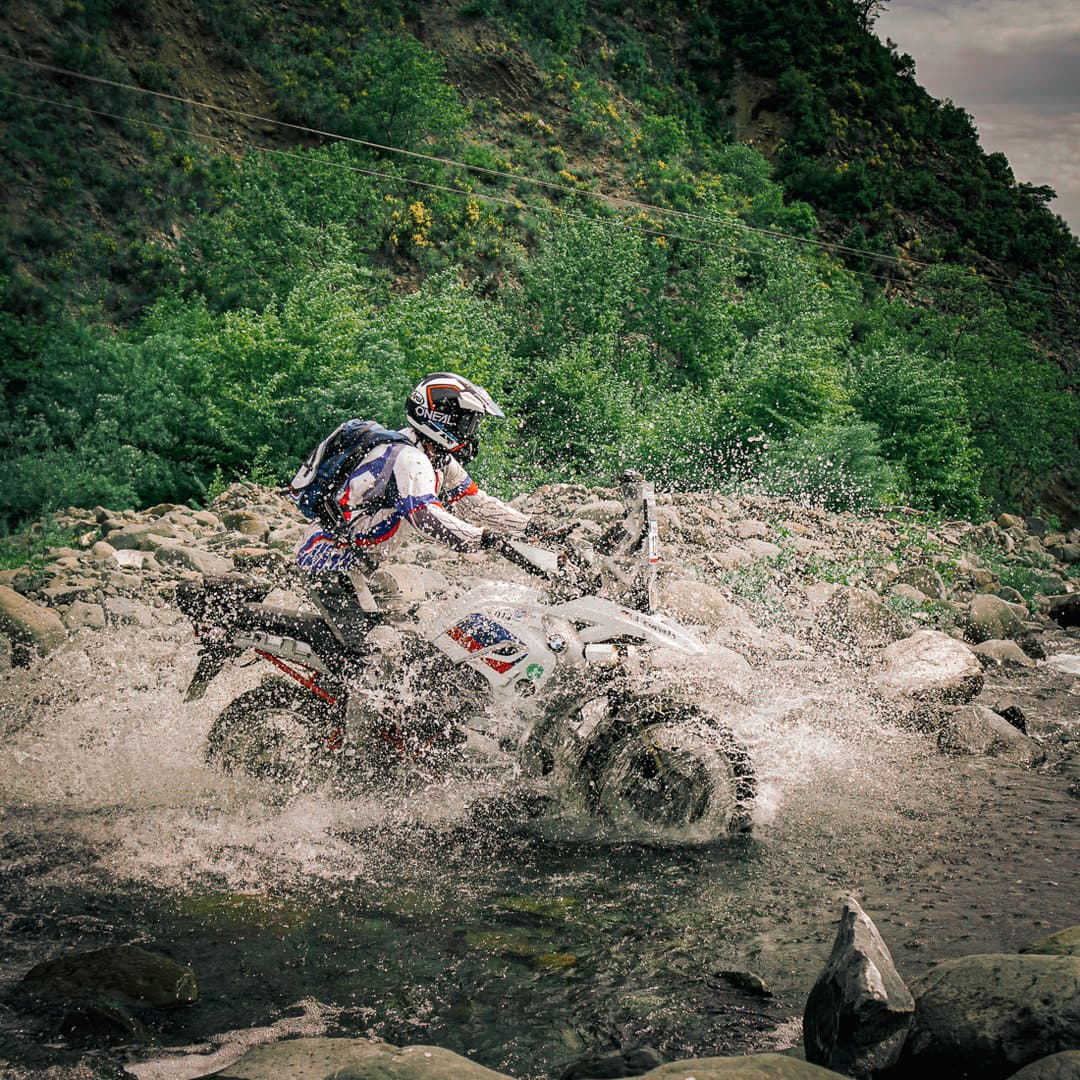
Cross streams one at a time. The next rider waits until the one before is safely on the far bank and clear. If the depth or bed is unclear, walk the ford first. Position yourselves so someone can help quickly if a bike drops in the water – every second counts in keeping water out of the air filter and engine.
Agree regrouping points: at key junctions, before and after difficult sections and at fuel stops. A proven rule is that whoever reaches a junction waits until the rider behind can see which way to go. That way nobody gets lost. If you do lose the group:
On the Bosnia Marathon you ride independently on GPX tracks, alone or in smaller groups. It is not a race and there is no timing; each day you choose between the more demanding Rally route and the easier Classic route. Breakfast runs from 7 to 8, the start is at 8:30 and the briefing is at 19:00 – a good moment to form groups for the next day.
Throughout all six riding days participants are tracked via OWAKA GPS, and an emergency team is on duty. An experienced motorcycle instructor runs free off-road training starting three days before the event and then accompanies the riders during the riding days. For loading the tracks onto your device, see GPS navigation for an off-road motorcycle tour.
Enough to be clear of the dust from the rider ahead and to see hazards in time – much more than on tarmac. In the wet, keep the gap large because braking distances are longer.
Small groups of similar ability work best: everyone can keep an eye on each other, and stops or help are quick to organise.
No. You ride independently on GPX tracks, alone or in smaller groups, with no timing. All participants are tracked via OWAKA GPS, and an emergency team is out on the route.
Stop, stay on the track and ride back to the last regrouping point or wait there. Never cut across country and don't chase after the others.
23 October 2026 · 5 min read
From check-in on 12 June to checkout on 19 June: what a week at Bosnia Marathon 2027 looks like, and how a single riding day actually works.
Read more23 October 2026 · 6 min read
The T7 is a superb match for Bosnia's gravel and forest roads. Here is how to set it up, how to ride it on loose ground and which route suits you at the Bosnia Marathon 2027.
Read more23 October 2026 · 6 min read
Taking a big GS onto Bosnia's gravel works well if your expectations are realistic, you pick the Classic route and you adapt your technique to the weight.
Read more