23 October 2026 · 5 min read
Best Time for a Motorcycle Tour in Bosnia
Spring, summer or autumn? Why altitude sets the riding season in Bosnia and when our Balkan tours take place.
Read moreTrip planning
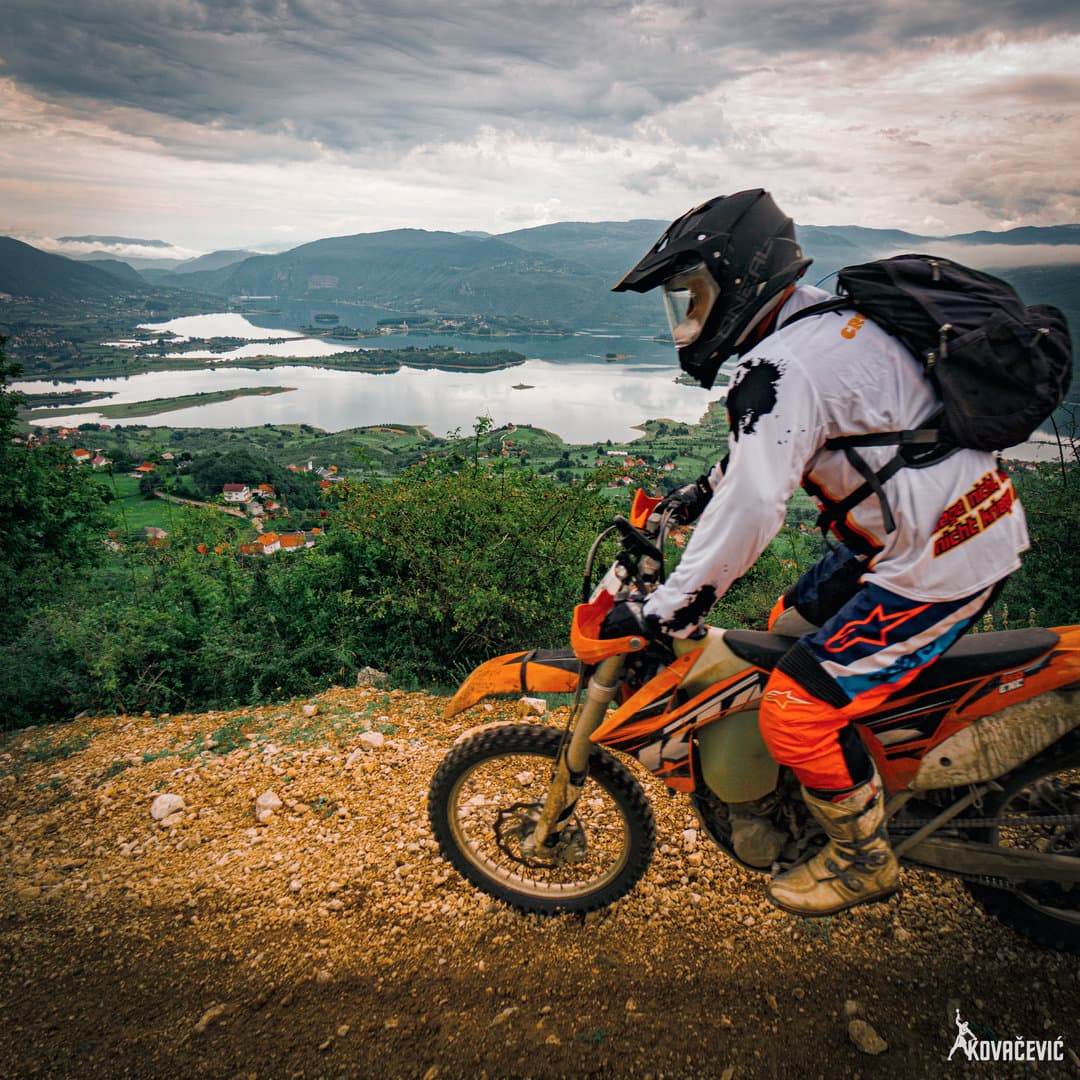
Bosnia and Herzegovina is closer than many people think. From Munich to the Kupres highlands it’s around 1,000 kilometres – easily done in two days on your own bike, or in one long day with a van or trailer.
Here’s everything you need to know about riding there on your own motorcycle: routes, the border crossing, documents, road rules and the little things that work differently from back home.
From southern Germany, the classic way runs via Salzburg, the Tauern or the Karawanks Tunnel into Slovenia, then on via Ljubljana to Zagreb. From Zagreb you have two good options:
From Austria, Bosnia is particularly quick to reach. From Vienna the route runs via Graz and Maribor to Zagreb, then as described above via the A1 and Livno, or the scenic way via Bihać. It’s around 800 kilometres from Vienna to Kupres and around 650 kilometres from Graz – comfortably doable in a day with a van or trailer.
From Salzburg, Tyrol and Carinthia, take the Tauern motorway or the Karawanks Tunnel to Ljubljana and on to Zagreb. From Vorarlberg the journey is about as long as from Switzerland.
From Zurich to Kupres it’s around 1,250 kilometres, depending on the route. Most riders go over the Arlberg or via Innsbruck to Villach, through the Karawanks Tunnel into Slovenia and on via Zagreb. Alternatively, you can go via Milan and Trieste – or ride to Ancona and take the overnight ferry to Split. From Split it’s only around 150 kilometres to Kupres.
A few things are specific to Swiss riders:
Since Croatia joined the Schengen Area in 2023, the border between Croatia and Bosnia has been an external Schengen border. That means there are checks – at weekends and during the holiday season there can be queues at the big crossings. Smaller crossings are often much quicker.
As a German, Austrian or Swiss citizen, you can enter with a valid national ID card or passport and stay for up to 90 days. Before you leave, check that your ID documents are valid for long enough, and look up the latest travel advice from your foreign ministry.
The main rules are the same as what you know from central Europe. There are a few points worth remembering, though:
The local currency is the convertible mark (KM, internationally BAM). It’s pegged to the euro: 1 euro equals 1.95583 KM, and in everyday life people simply work with 2 to 1. Euros are accepted in hotels and at many petrol stations, but you’ll usually get your change in KM. In towns you can pay by card without any problems; in villages and small guesthouses you should carry cash.
Important for your phone: Bosnia and Herzegovina is not part of the EU roaming zone. Mobile data can get expensive quickly without the right plan. Switch off data roaming before the border and buy a local SIM card or an eSIM for the region.
There are plenty of petrol stations along the main roads, but in the highlands and on off-road stages they can be far apart. Fill up before every longer section – especially if you’re riding a small sport enduro.
Since the war of the 1990s, Bosnia and Herzegovina is not yet completely free of landmines. There is no danger on roads and well-used tracks – but you should never ride cross-country or try out unknown tracks. We’ve put everything you need to know about this into a separate article: Off-road in Bosnia: rules and landmines.
For the Bosnia Marathon, Hotel Adria Ski in Kupres is the shared base. Vans and trailers can stay there for the whole tour, so you ride the stages without carrying extra luggage. In the WhatsApp group before the start, many participants arrange to travel together – so you can share fuel, tolls and driving time.
Not if you are a German, Austrian or Swiss citizen: you can enter with a valid national ID card. Riders from countries without a national ID card, such as the UK, need a passport. Check the latest travel advice from your foreign ministry before you go.
No, a Green Card is no longer required for Bosnia and Herzegovina. Before you travel, though, check with your insurer whether your third-party and comprehensive cover applies in Bosnia.
Often, yes – especially in hotels and at petrol stations. The local currency, however, is the convertible mark (€1 = 1.95583 KM). For villages and small guesthouses you should carry cash in KM.
Around 1,000 kilometres, depending on the route. On a motorcycle most riders plan two days; with a van or trailer it’s possible in one long day.
From Vienna it’s around 800 kilometres via Graz, Maribor and Zagreb, and from Graz around 650 kilometres. With a van or trailer you can do it in a day.
From Zurich it’s around 1,250 kilometres, usually via Austria and Slovenia or via Milan and Trieste. A comfortable alternative is the overnight ferry from Ancona to Split; from there it’s around 150 kilometres to Kupres.
23 October 2026 · 5 min read
Spring, summer or autumn? Why altitude sets the riding season in Bosnia and when our Balkan tours take place.
Read more18 October 2026 · 8 min read
Slovenia, Croatia, Bosnia, Montenegro and Serbia are just one or two days' ride from Central Europe. Here's how to plan your Balkan motorcycle trip.
Read more23 October 2026 · 5 min read
From check-in on 12 June to checkout on 19 June: what a week at Bosnia Marathon 2027 looks like, and how a single riding day actually works.
Read more